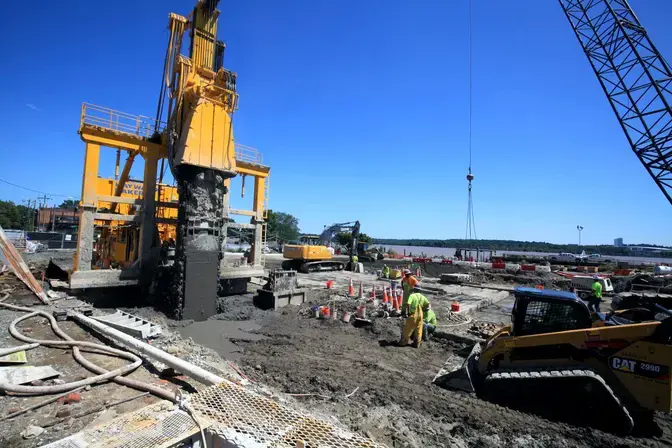
Trench soil mix (TSM) is a linear soil-mixed wall with improved engineering properties, installed using a cutting blade or post that mechanically blends in situ soils with a designed cementitious slurry. The result of the TSM installation is a stiffened linear wall with a target unconfined compressive strength and/or permeability.
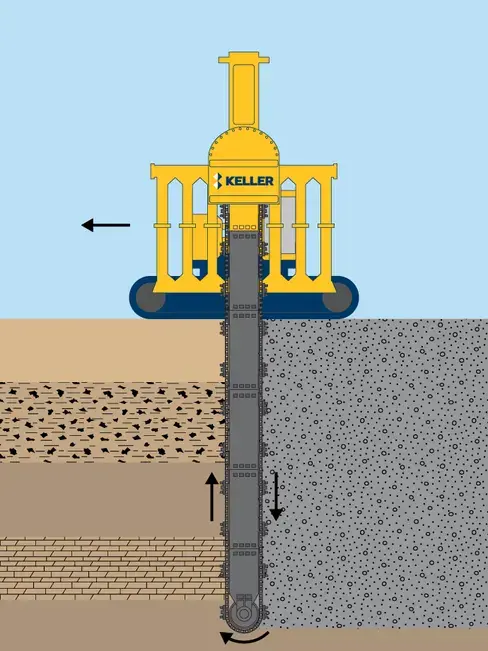
Process
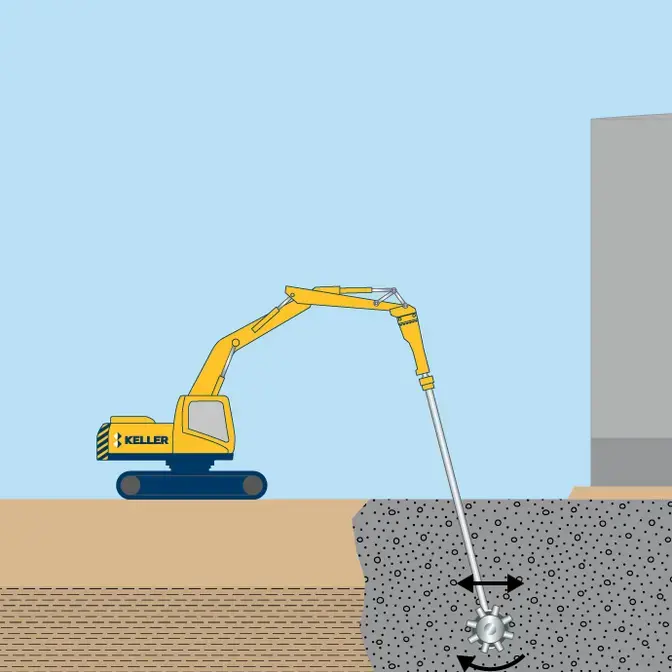
Soil treatment can be accomplished with an excavator-mounted cutting blade (TSM method) or a cutter post mounted on a base crawler machine (TRD method), with installation depths of up to 150 feet; however, typical panel depths are 10 feet to 30 feet.
Trench soil mixing is performed by inserting the cutter blade/post, resembling a large chainsaw, into the in situ soil until the wall's design depth is reached. The rig then advances along the wall alignment while the cutter disaggregates and mixes the in situ soil with the designed slurry injected from ports on the post.
The vertical mixing blends the soil profile, eliminating stratification and creating the soil mix wall, commonly referred to as soilcrete, with designed depth and thickness.
Ideal trench mixing ground conditions
Trench mixing is applicable to most cohesive and granular soils; however, ease of mixing depends on soil type, strength, density, water content, plasticity, stratigraphy, and texture.
Equipment and tooling are selected based on the subsurface soil conditions. Pre-drilling can be used to improve productivity in very dense soils or soft rock, or if obstructions are anticipated.
Related geotechnical techniques
Select a technique:
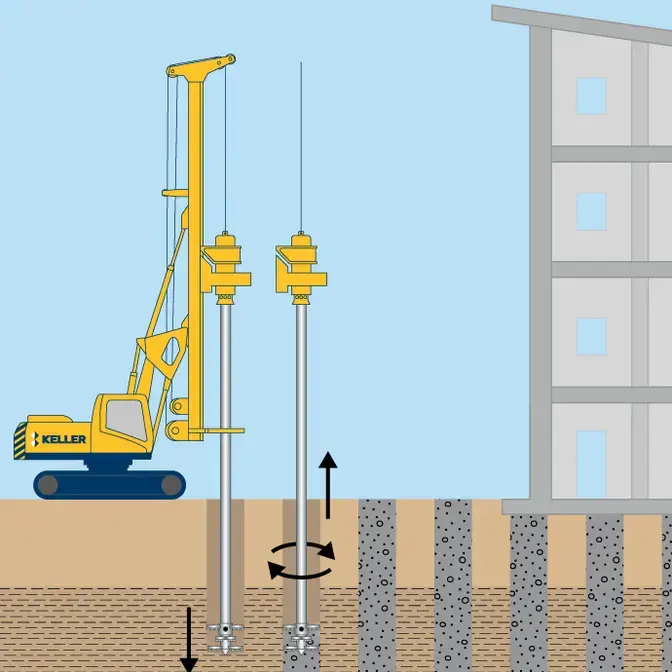
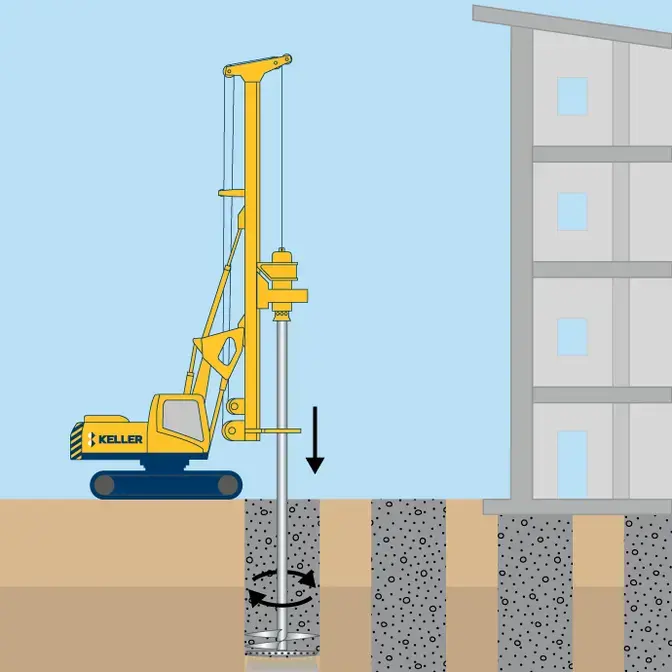
Common uses
- Cut-off walls to mitigate seepage or contaminant transport
- Temporary shoring for deep excavations
- Mitigate liquefaction
Advantages
- Quiet and vibration-free
- High degree of uniformity
- Designed strength and low permeability of stabilized soils
- Uses readily available materials
- Offers groundwater control
- Can reduce construction time versus conventional methods
- 0an be used to solve numerous geotechnical and groundwater issues
Quality assurance
Pre-production laboratory testing is used to evaluate the required grout mix design and validate the installation methodology. A pre-production field test program is often conducted to validate grout mix and installation parameters (grout volume, mixing energy, production rate) and to assess batching and pumping operations.
Data acquisition systems can be employed for real-time monitoring of all mixing parameters during the installation process and to monitor the verticality of the tooling. Test columns can be excavated for visual inspection of the soilcrete. Wet sampling in fresh soilcrete (which can be performed at various depths) and coring of cured material can be used to verify strength and permeability. Visual inspection of the in situ soilcrete elements is possible with a camera lowered into a core hole. In situ testing options for the elements are also available.
Related projects
Infrastructure
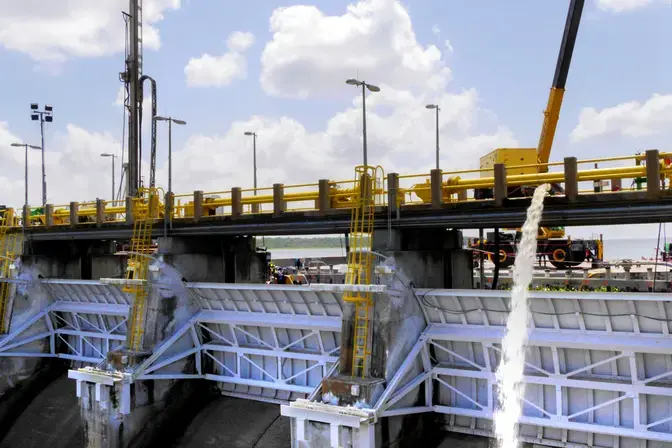
Lake Manatee Dam
Keller accelerated construction to complete treatment of critical sections before the impending hurricane season with potentially catastrophic high-water loading.
Residential
Robinson Landing