Wick drains, also known as prefabricated vertical drains (PVDs), are prefabricated geotextile-filter-wrapped plastic strips with molded channels. They act as drainage paths, removing pore water from soft, compressible soil, allowing it to consolidate more quickly. Wick drains are commonly used to accelerate consolidation from years and decades to as little as one month, depending on the soil properties and wick drain spacing.
Process
Wick drain manufacturing
Wick drains, or PVDs, consist of prefabricated strips ideal for water transport. The flexible core is typically made of polypropylene, and both sides feature grooves that allow water to flow unimpeded.
The core is wrapped in a strong and durable geotextile filter fabric with excellent filtration properties, allowing free access of pore water into the drain. This also prevents piping fines from adjacent soils without clogging. Wick drain core and fabric materials can be modified based on the properties of the soils being treated and may be required to address large settlements, very high flow capacity, or specific filtration properties.
Wick drain installation
- The wick drain is fed, from an adjacent storage reel, down through a hollow mandrel mounted on an excavator or crane mast, connected to an expendable anchor plate at the bottom.
- A vibratory hammer or static method inserts the mandrel to the design depth. As the mandrel is removed, the anchor plate engages with the surrounding soil, leaving the wick drain in place.
- The wick drain is then cut at the ground surface, a new anchor plate is connected to wick protruding from the mandrel, and is then moved to the next location.
A pattern of installed vertical wick drains shortens the drainage paths for pore water and thus accelerates the consolidation process and the construction schedule. The wick drain spacing is determined by the properties of the soil they are installed in, the desired consolidation schedule and the budget to construct the work.
Specialist contact

Logan Bessette, PE, is Vice President of Keller North America.
Logan has over 13 years of expertise in the geotechnical construction industry, managing and executing complex projects across North America. Logan joined Hayward Baker (now Keller) in 2013 and progressed from Field Engineer to Project Manager before advancing into senior leadership roles. His career has been dedicated to delivering innovative and cost-effective solutions for some of the most challenging infrastructure projects, ensuring safety, quality, and sustainability at every stage.
Logan earned a Bachelor of Science in Civil and Environmental Engineering from Norwich University and a Master of Science in Civil Engineering from West Virginia University. He is a licensed Professional Engineer and has also pursued graduate studies in Geotechnical and Geoenvironmental Engineering at Missouri University of Science and Technology.
Common uses
- Typically used in soft, saturated fine-grain soils, such as silts, clays, peat, sludges, mine tailings, and dredge fills, with large pore capacity and fully saturated
- Accelerate consolidation settlement from years to months for highway embankments, bridge approaches, MSE walls, and levees
- Used with preloads and surcharges to achieve design settlement requirements of structures, including commercial spaces, warehouses, and data centers
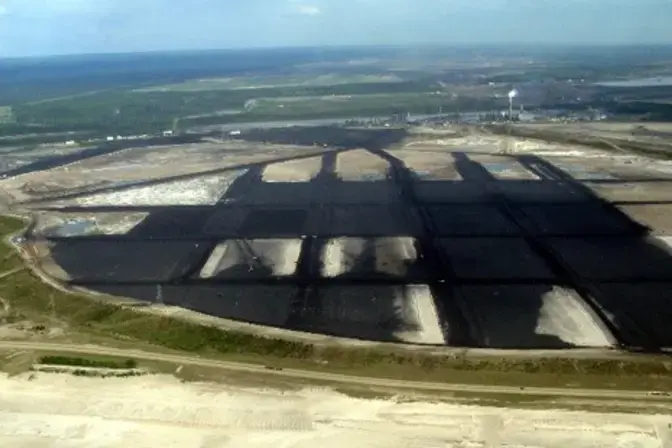
- Consolidate tailing ponds to increase Tailings Storage Facility capacity, evacuate pore water to circulate back into mining production, and to increase the stability of material for dam raises
- To penetrate through low-permeability layers in heap leach pads
Advantages
- Wick drains offer high-speed installation and accelerated drainage, which in turn accelerates overall construction schedules.
Quality assurance
We ensure quality through the following:
- Automated data acquisition to record installation parameters
- Trial area monitoring to prove design assumptions
- Provide desktop reviews of wick drain designs by independent engineers and agencies
- Geotechnical monitoring in the form of settlement plates to track consolidation settlement magnitudes and piezometers to evaluate pore pressure response
- ASTM testing of wick drain materials by 3rd party testing
- Meet all requirements of Buy America(n) and Build America, Buy America (BABA)
Related projects
Infrastructure
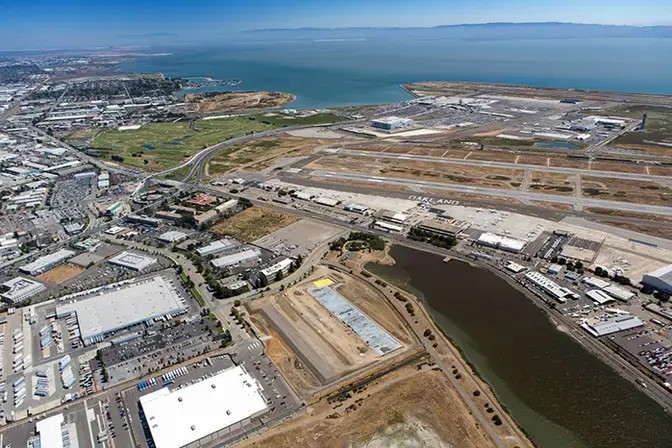
Port of Oakland - CenterPoint Landing Warehouse
The City of Oakland has overseen operations at the Port of Oakland since the late 1800s. It was the first major port on the West Coast to build terminals for container ships in the 1960s and over time has blossomed into a major logistics hub.
Infrastructure
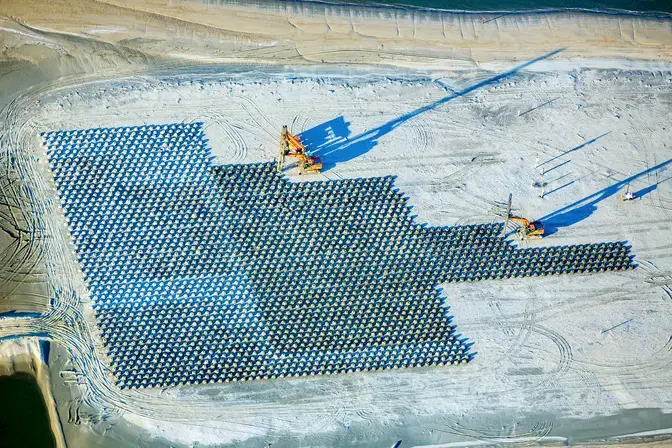
Craney Island Eastward Expansion
The Virginia Port Authority seeks to increase its East Coast market share of container storage and distribution by taking advantage of Portsmouth’s deep water and prime distribution position to create a 500+-acre area of above-water “made land” stretching out into the Elizabeth River.
Infrastructure
Atlantic Wood Superfund Site
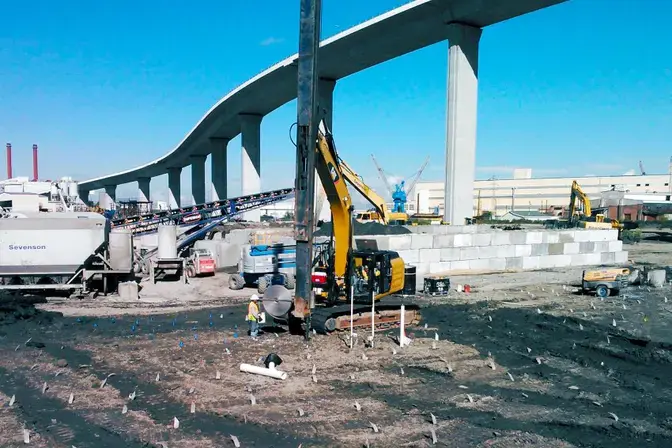
Keller assisted the client in identifying an economical approach to produce a safe working platform for the equipment while minimizing the impact on the schedule.
Infrastructure
Coldwater Sanitary Relief Storage Tank C
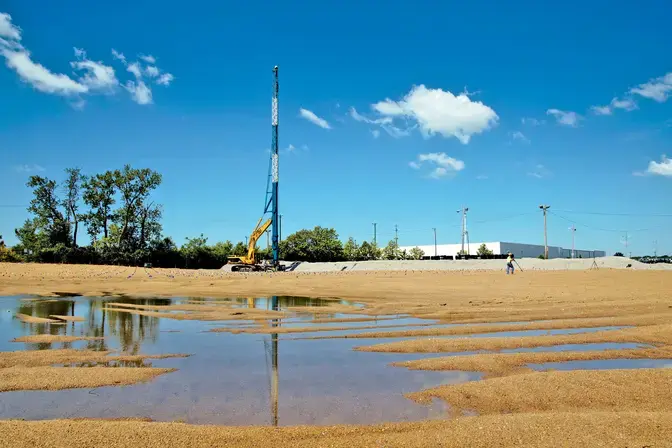
Keller reduced the total foundation cost using a combination of wick drains and surcharging to eliminate down-drag on the pile foundation system and reduced the time required to achieve full consolidation from 50 years to less than 1 year.
Mining
Suncor Pond 5
Keller developed equipment and procedures enabling the safe installation of the drainage system from on top of a floating coke cap working platform. Keller was awarded Suncor’s “President’s Operational Excellence Award for Personnel Safety.”