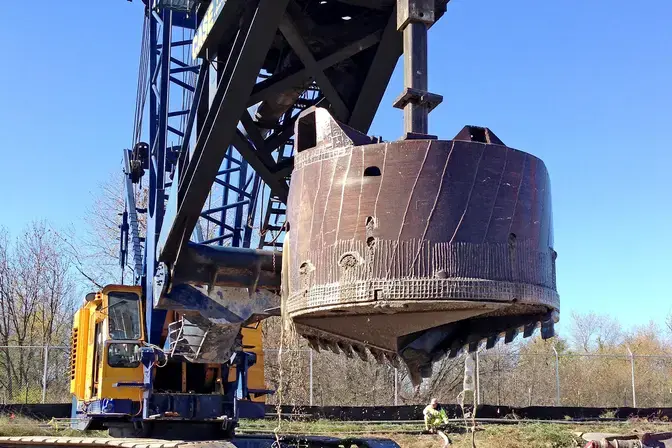
Drop shafts and vent shafts provide access or ventilation into a large-diameter, horizontally bored tunnel through bedrock.
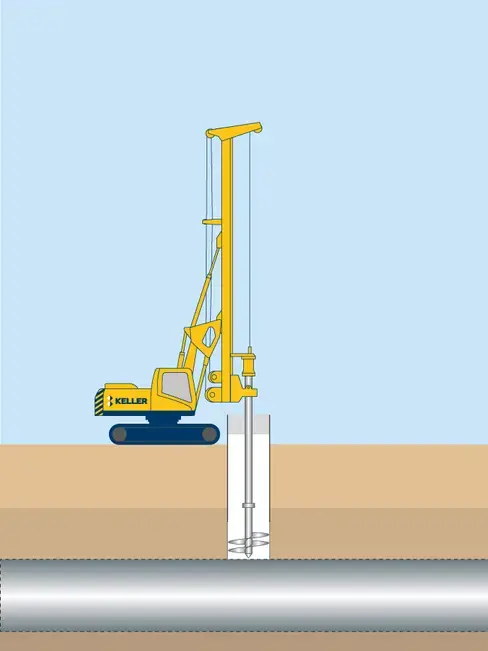
Process
The most common types of these shafts and tunnels are part of Combined Sewer Overflow (CSO) projects, where untreated or partially treated waste, debris, and stormwater are collected and stored during large weather events that would otherwise lead to flooding.
Using specialized drilling equipment, Keller excavates overburden and sets a permanent steel casing on the underground bedrock layer. This casing is often grouted in place. Then, the rock is removed below it to a specified elevation, usually coinciding with the top of the tunnel to be bored below it.
For larger-diameter drop shafts exceeding 12 feet in diameter, a secant pile wall can be constructed to support the excavation instead.
Specialist contact

Paul Schmall, Ph.D., PE, is Vice President of Business Development at Keller North America.
He has more than 35 years of experience in geotechnical engineering and underground construction, with expertise in groundwater control, dewatering, grouting, ground freezing, tunneling, dam construction and rehabilitation, and forensic investigations of geotechnical failures related to groundwater.
Paul holds a Bachelor of Science in Civil Engineering from Bucknell University and a Ph.D. in Geotechnical Engineering from the University of Nottingham. He is a co-author of the third edition of Construction Dewatering and Groundwater Control and served as President of The Moles, one of North America's leading heavy construction organizations.
Common uses
- Combined Sewer Overflow (CSO) projects
Advantages
- We can install these shafts within a strictly specified verticality specification at depths often exceeding 100 feet

Related projects
Infrastructure
Deep Rock Tunnel Connector
Keller completed construction of the tunnel nearby to downtown Indianapolis, so crews worked successfully within extremely small footprints.