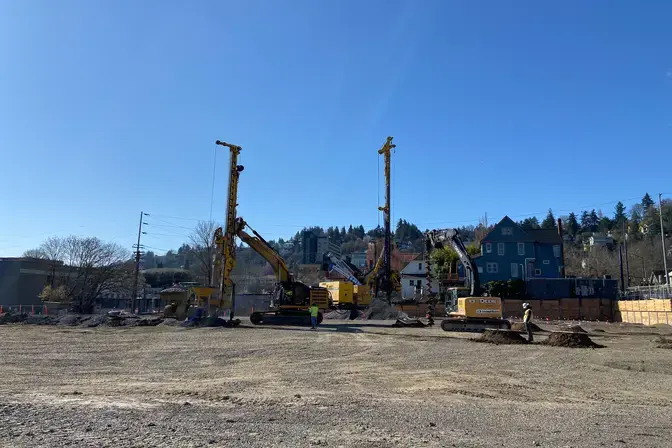
Ground improvement solutions are often used as alternatives to deep foundations or in combination with foundation systems, depending on site conditions and project requirements.
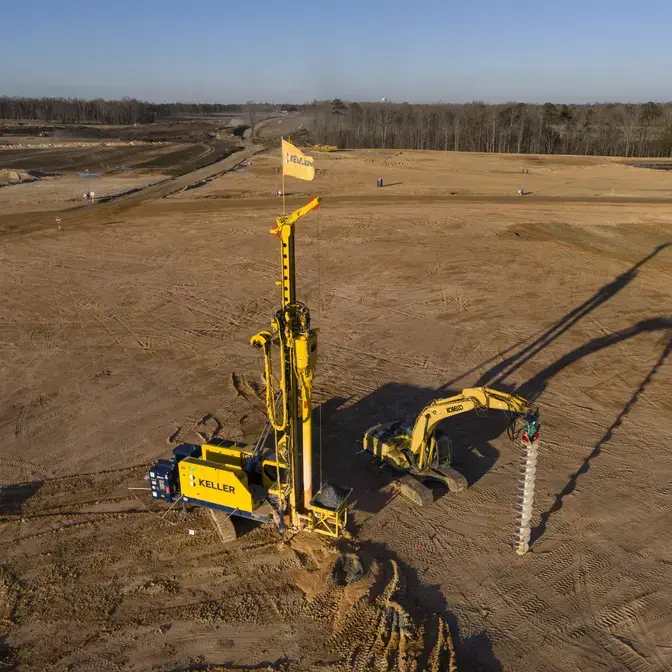
What is ground improvement?
Ground improvement includes a range of techniques used to modify or enhance the engineering properties of soil and ground conditions. These methods are applied to improve strength, stiffness, and stability, or to reduce settlement and deformation under load.
When is ground improvement used?
Ground improvement may be applied when:
- Existing soils lack sufficient strength or stiffness
- Settlement must be reduced or controlled
- Shallow foundations are preferred over deep foundations
- Construction is planned on loose, soft, or variable soils
- Project constraints require cost‑effective or low‑carbon solutions
Ground improvement is often considered as an alternative to deep foundations or as part of a combined solution. In some cases, improving soil strength and stiffness allows shallow foundations to be used. In others, ground improvement is used to reduce settlement, mitigate liquefaction, or complement deep foundation systems to achieve performance or constructability benefits.
Ground improvement process
Ground improvement techniques are selected based on soil type, loading conditions, and project constraints. Depending on site conditions, soils may be improved through densification, reinforcement, replacement, stabilization, or a combination of methods.
- Densification techniques use vibration or displacement to improve granular soils.
- Reinforcement involves constructing or inserting stiff elements within the ground to create an improved composite material.
- Stabilization methods improve soil properties by introducing cementitious or chemical binders, either by permeation in granular soils or through mixing in cohesive and mixed soil types.
For soft or compressible soils, wick drains (vertical drains) may be installed to accelerate consolidation and strength gain when soils are subjected to surcharge loading, reducing construction time and post‑construction settlement.
Subsurface voids can lead to settlement and structural instability. Keller's full range of void‑filling techniques includes compaction grouting, cement grouting, polyurethane grouting, and other specialized systems that permanently fill voids and stabilize the ground. These solutions are commonly applied to mitigate mine subsidence and stabilize sinkholes beneath existing structures and infrastructure.
Expansive clay soils can cause ground heave and damage to overlying structures. Keller uses injection systems to treat expansive clays beneath buildings and landfills with the pressure injection of an aqueous solution of water, lime or lime/fly ash slurry, or potassium chloride.
- Water injection to pre‑swell expansive clays before construction
- Lime injection to fill the desiccation pattern of expansive clay with slurry and improve workability for building pads, pavements, and runways
- Lime/fly ash injection to improve low‑strength soils and increase bearing capacity and trafficability
- Potassium chloride injection to arrest heave beneath existing structures by limiting clay moisture absorption
Why choose Keller for ground improvement?
Keller offers a full range of ground improvement techniques and the experience to select the right approach for each site. Because we also deliver deep foundation and earth retention systems, we can evaluate alternatives and recommend the optimal solution or combinations of solutions.
Common uses
- Increase bearing capacity for foundations and slabs
- Reduce settlement and permeability
- Mitigate liquefaction potential
- Accelerate settlement
- Improve ground performance for embankments and earthworks
- Mitigate liquefaction potential
Related projects
Commercial
475 Sycamore
Keller provided a design-build Vibro Pier® solution for a new warehouse facility near the tip of the San Francisco Bay.
Education
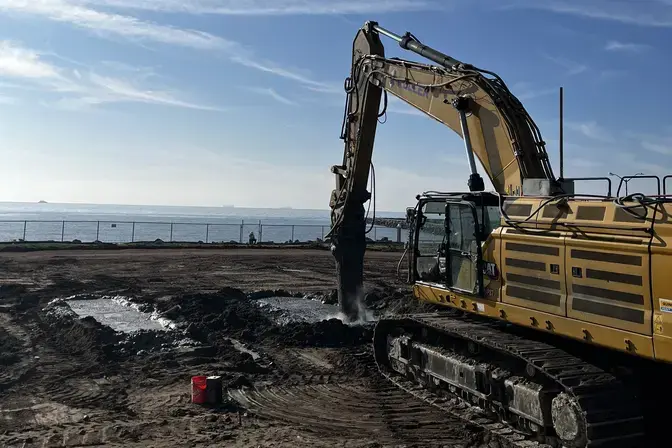
Encinal High School Stadium Renovations
Keller collaborated with the geotechnical engineer to design a ground improvement solution that addressed seismicity concerns, as required by the California Geological Survey (CGS).
Infrastructure
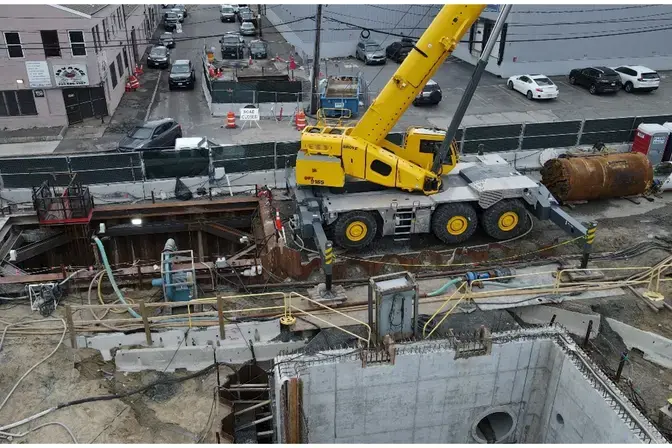
West Lynn Sewer Separation Phase 3
With the increasing severity of weather events and urbanization leading to higher water flows, sewer system improvements are consistently underway to increase capacity. In West Lynn, the installation of a 54-inch force main was underway when Keller was contacted to formulate a ground improvement solution to allow for the safe installation.
Commercial
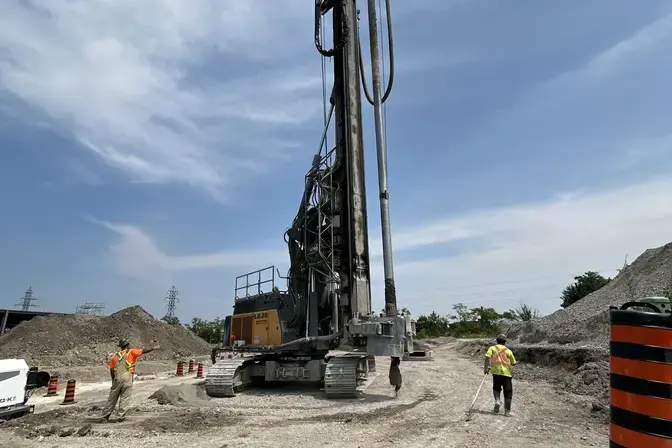
Bus Maintenance and Storage Facility
After discovering differing ground conditions, Keller provides an alternative design for the new bus facility.
Institutional
Lincoln High School Modernization
Keller provides a design-build Vibro Pier® solution for the first high-rise high school on the West Coast.