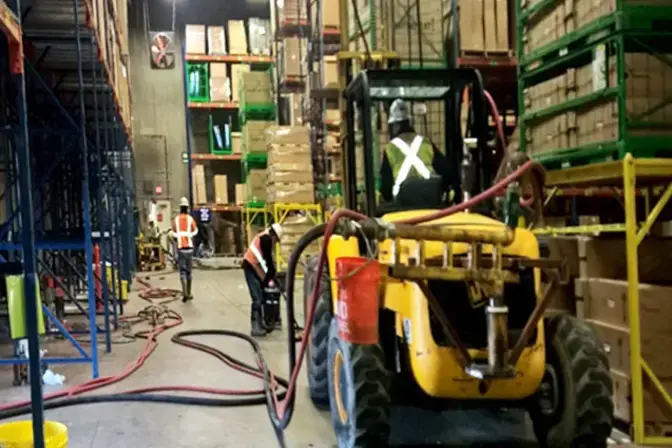
Injection systems involve injecting aqueous solutions into the ground to treat expansive, collapsible, and desiccated clay and railroad subgrade mud pockets.
Process
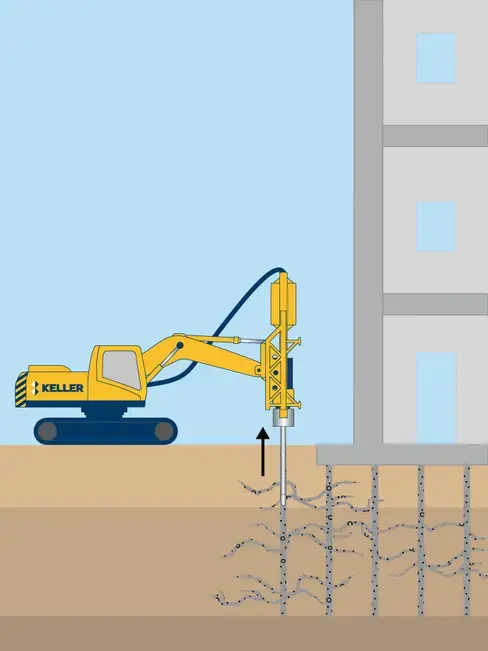
The composition of the aqueous solution depends on the application. Injection units advance injection pipes into the treatment zone. An aqueous solution of water, lime slurry, cement slurry, or potassium chloride is injected to reduce shrink/swell potential for treating expansive soils.
Specialist contact
Jarrod Widmer is a Project Manager at Keller North America.
Since joining Keller in 2018, Jarrod has progressed through roles including Field Engineer, Project Engineer, Assistant Project Manager, and Project Manager. He specializes in ground improvement and injection systems, supporting projects that address expansive, collapsible, and desiccated soils for transportation, residential, and infrastructure applications. In his current role, he manages project execution, estimating, preconstruction planning, and client coordination for geotechnical construction projects across the Central Region.
Jarrod earned a Bachelor of Science in Civil Engineering from the University of Kansas in 2018.
Common uses
- Treat soils below planned and existing railways, roadways and buildings
- Stabilize expansive soil
- Cement embankment and levee slides
- Stabilize railroad subgrades
Advantages
- Keller has in-house designed and built rigs to perform these projects safely and efficiently
Related projects
Commercial
Irving-Toyota Music Factory
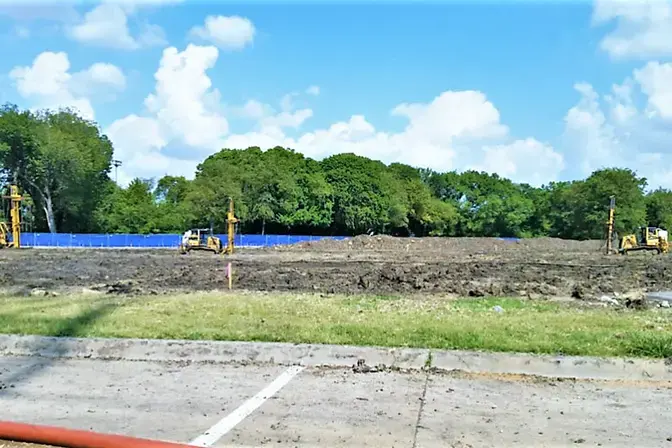
Keller's use of a water injection system significantly reduced the cost to the owner and allowed the project to be completed a month ahead of schedule.
Commercial
American Honda Office and Warehouse
The 20,000 square foot treatment area of the American Honda Office and Warehouse was stabilized while keeping it fully operational.