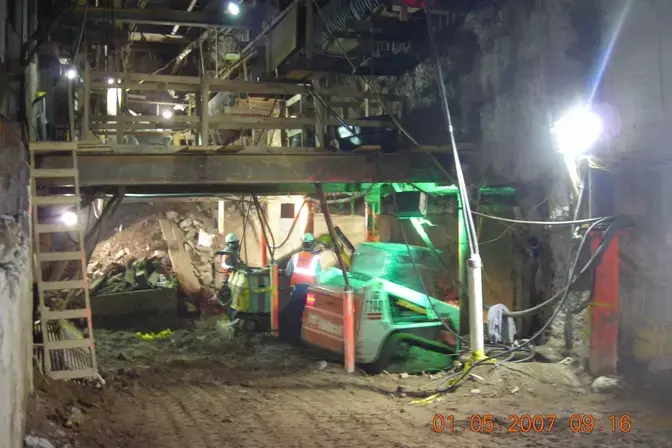
Permeation grouting (cement grouting, chemical grouting, or pressure grouting) fills cracks or voids in soil and rock, permeating granular soils with flowable grouts to create a cemented mass.
Process
Chemical grouting transforms granular soils into sandstone-like masses by filling the voids with low viscosity, non-particulate grout. Sands with low fines content are best suited for this technique. Typically, a sleeve port pipe is first grouted into a pre-drilled hole. The chemical grout is injected under pressure through the ports. The grout permeates the soil and hardens, creating a sandstone-like mass. The grouted soil has increased strength, stiffness, and reduced permeability.
Chemical grouting offers the advantages of being easily performed where access and space are limited and no structural connection to the foundation being underpinned is required. A typical application of chemical grouting is to provide excavation support and underpin existing structures adjacent to an excavation. It can typically be accomplished without disrupting normal facility operations.
Chemical grouting equipment is suited for tunneling applications in urban environments, whether for stabilizing soil around break-ins or break-outs or mitigating settlement of overlying structures within the influence of the tunnel alignment.
Specialist contacts

Lucian Spiteri, PE, is a Vice President Pre-Construction at Keller North America.
Lucian has more than 20 years of experience in geotechnical engineering and construction. He holds a Bachelor of Science in Civil Engineering from Manhattan College and has developed deep expertise in ground modification and construction dewatering, including various grouting techniques and systems using wells, wellpoints, and ejectors.
Lucian has contributed to major infrastructure projects such as the Second Avenue, East Side Access, and Number 7 Line Extension in New York City, as well as complex remediation efforts, including a large-scale sinkhole stabilization in Florida and rehabilitation work at the World Trade Center site.

Maxwell Pucciarello, PE, is an Engineering Manager at Keller North America.
Max is the Engineering Manager for Keller’s specialty grouting group. In this capacity, his focus is on overseeing and managing the design, development, and implementation of specialty grouting projects, including jet grouting, compaction grouting, rock grouting, and permeation grouting. He has a bachelor’s degree in civil & environmental engineering from Bucknell University, a bachelor’s degree in geology from Bucknell University, and a master’s in geotechnical and geoenvironmental engineering from Rutgers. He is a registered Professional Engineer in the States of New Jersey and New York.
Common uses
- Create barriers to groundwater flow
- Underpin foundations
- Provide excavation support
- Stabilize and strengthen granular soils
Advantages
- An economic advantage for underpinning applications over alternative approaches such as removal and replacement or piling
- Allows you to maximize the footprint of excavations compared with piled solutions
- Can be done where access is difficult and space is limited
- Since effectiveness of permeation grouting is independent of structural connections, is readily adaptable to existing foundations
- Can typically be accomplished without disrupting normal facility operations
Quality assurance
Keller has developed proprietary equipment and software (iGroutTM) to allow real-time monitoring of all parameters during the chemical grouting process. The operator can adjust the parameters (such as mix type, flow rate, pressure, and volume limits) based on the real-time acquisition of drilling and grouting data while simultaneously monitoring for any movements or deflections of the ground or nearby structures. Data collected during drilling and grouting is recorded on a server that produces grouting reports and CAD drawings. This advanced monitoring and control system increases chemical grouting accuracy, efficiency, and quality control while reducing risk.

Related projects
Commercial
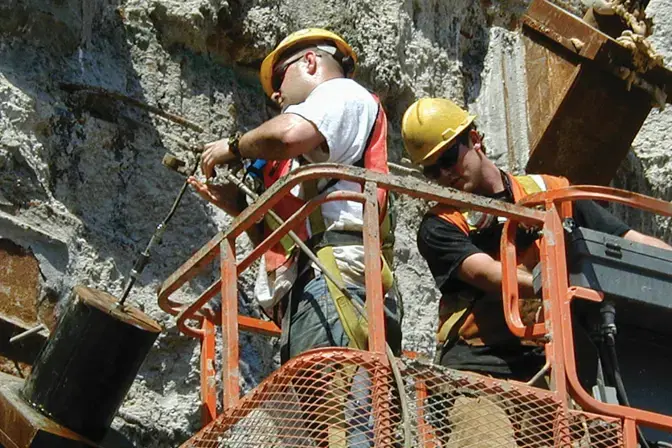
World Trade Center Bathtub Rehab
Keller initiated a chemical grouting program to address groundwater leakage and potential ground loss through the damaged perimeter slurry wall “bathtub” area located 75-ft below street level, 66-ft below the water table.
Infrastructure
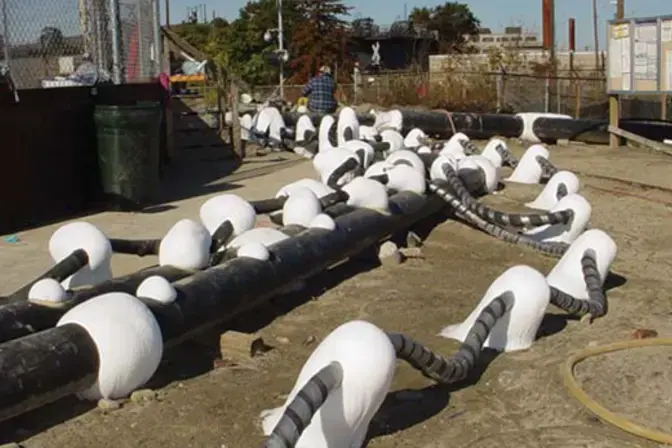
Combined Sewer Overflow Tunnel
Moving groundwater and groundwater contamination can inhibit freeze closure. Keller overcame these challenges with accurate and early diagnosis of the condition and timely reaction to mitigate potential project delays.
Infrastructure
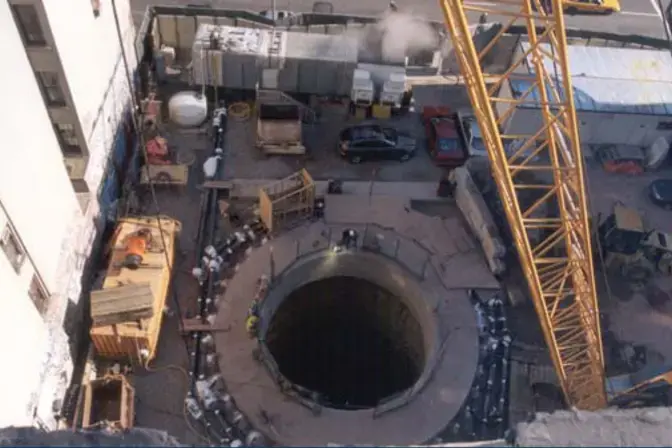
New York City Water Tunnel No. 3
An extensive instrumentation and monitoring program was instrumental in early diagnosis of moving groundwater at two shafts. Timely implementation of grouting ensured the success of freezing at these locations.
Residential
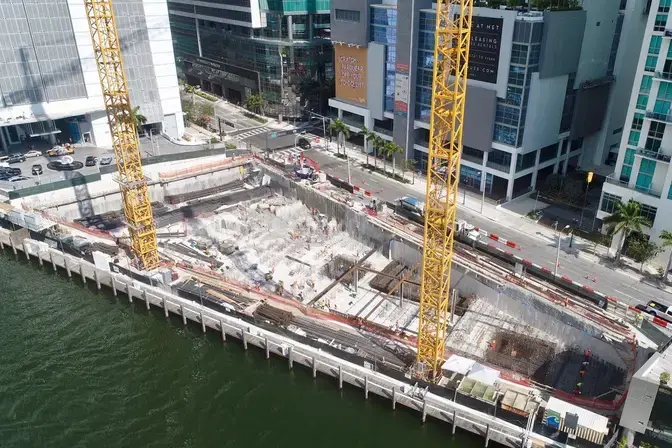
Aston Martin Residences
Keller’s multi-technique solution provides groundwater control and deep foundations for luxury high rise constructed feet away from Biscayne Bay.
Infrastructure
Dey Street Connector
The Fulton Street Transit Center was constructed under the New York MTA’s Capital Construction Program to accommodate five subway stations handling nine lines. Keller completed various techniques, including dewatering and remedial grouting.