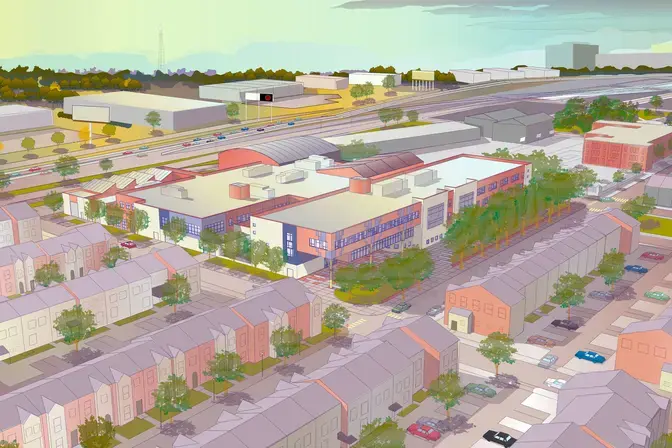
Rapid impact compaction (RIC) is a ground improvement method used to densify shallow granular soils and fill materials. The process uses a hydraulic hammer that repeatedly strikes an impact plate on the ground surface to improve soil density, increase bearing capacity, and reduce settlement for shallow foundation support.
Process
Rapid impact compaction transfers energy into loose granular soils and fill materials, rearranging soil particles into a denser formation and improving the engineering properties of the ground. Impact locations are typically laid out in a grid pattern, with spacing determined by subsurface conditions, loading requirements, and foundation geometry.
Common uses
- Improve bearing capacity for shallow foundations, slabs, and working pads
- Reduce total and differential settlement in shallow granular soils and fill materials
Advantages
- Improves soil density, friction angle, and stiffness in treated granular soils and fills
- Provides a cost-effective ground improvement solution for soils treated to depths of about 3 to 4 m
- Can allow the use of shallow foundations instead of deeper, more expensive foundation systems
Quality assurance
During rapid impact compaction, the energy input and soil deflection are monitored and recorded at each treatment location. This allows the geotechnical engineer to confirm when effective soil densification is complete, identify weak zones or debris zones, and target any required remedial work efficiently. The result is improved quality control, reduced risk, and potential cost savings across the treated area.
Related techniques
Related solutions

Related projects
Infrastructure
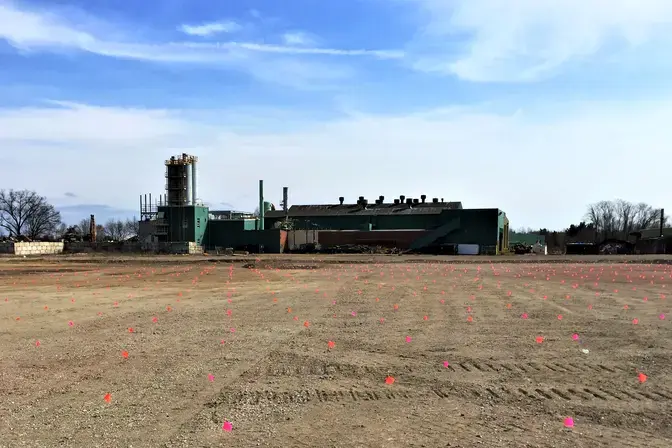
Rail Car Assembly Facility
Keller’s efficient and effective completion of the ground improvement work allowed for new foundation construction earlier than anticipated.
Institutional
Audenried High School
Construction of a new high school in historic Philadelphia required treatment of 20 feet of urban fill. Ground improvement was used to treat the poor subgrade soils.