Overview
Keller provides deep foundation solutions for projects where subsurface conditions, structural loads, or site constraints require load transfer to competent soil or bedrock. Our team selects the most appropriate technique based on ground conditions, performance requirements, and constructability.
What are deep foundations?
Deep foundations are structural elements used to transfer building or infrastructure loads through weak, compressible, or variable soils to deeper, more competent bearing strata.
Often referred to as heavy foundations, these systems are used when shallow foundations cannot provide adequate capacity or control settlement. Deep foundations are commonly required for tall structures, heavily loaded facilities, vibration-sensitive projects, and sites with challenging ground conditions, including urban and restricted-access environments.
When are deep foundations used?
Deep foundations are used when near surface soils cannot safely support structural loads or when settlement and performance cannot be adequately controlled using shallow foundations alone. They are typically required when loads must be transferred to deeper, more competent soil or bedrock. Deep foundations are commonly used when:
- Near‑surface soils are weak, compressible, or highly variable
- Structural loads are heavy or concentrated
- Settlement control is critical to performance or serviceability
- Uplift, lateral, or seismic loads must be resisted
- Construction occurs on constrained or urban sites
- Existing structures require additional support through underpinning
In some cases, deep foundations are evaluated alongside ground improvement solutions. Where soils can be enhanced in place to meet performance requirements, ground improvement may allow the use of shallow foundations. When soil conditions or load demands exceed what can be economically improved, deep foundations provide a direct and reliable load path to competent bearing strata.
Deep foundation construction methods
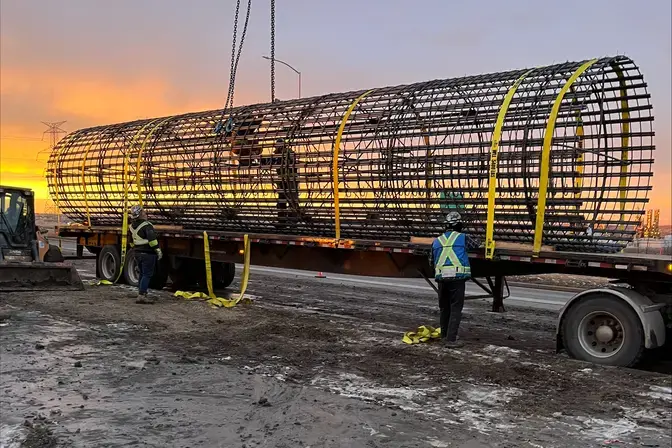
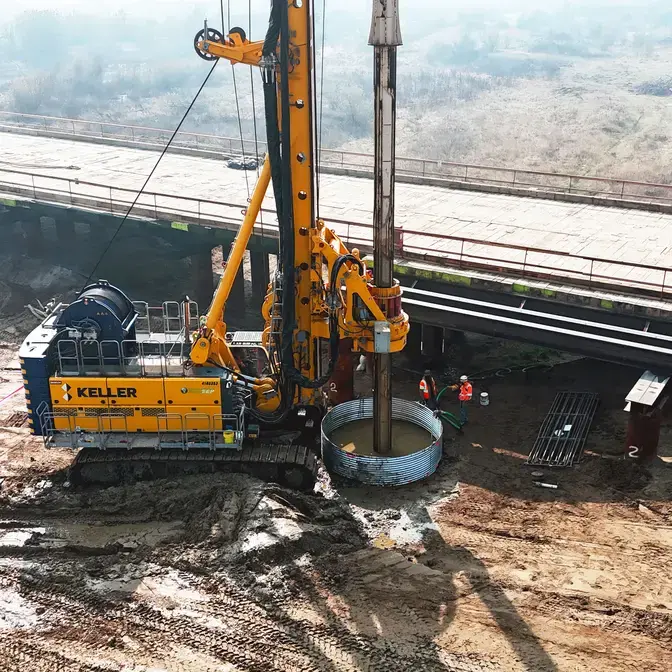
Deep foundations are typically connected to the structure and can be installed before construction or as underpinning elements for existing structures. Depending on ground conditions, systems can be constructed using driven elements of timber, steel, or reinforced concrete or constructed in the ground by drilling a cased or open hole and filling it with reinforced concrete.
Load transfer to the bearing stratum is achieved through end bearing, side friction, or a combination of both. In some applications, grouting techniques are used to enhance ground strength and improve load transfer performance. Keller’s broad technical capability allows our teams to select construction methods that are technically appropriate, constructible, and cost-effective.
Why choose Keller for deep foundations?
Keller combines deep foundation expertise with the ability to deliver a broad range of systems under one team. With design-build capability and multiple installation methods available, we can recommend the most technically appropriate solution based on site conditions, performance requirements, and constructability, while supporting safe, efficient execution.
Common uses
- Support new construction and existing structures where shallow foundations are not feasible
- Transfer compressive, tensile, and lateral loads to competent soil or rock
- Improve performance for static, dynamic, and seismic loading conditions
- Provide underpinning and load redistribution for existing buildings
Related projects
Commercial
Aurora Food Store
Keller installed CFA (auger cast) piles to support the construction of a grocery store in Regina.
Institutional
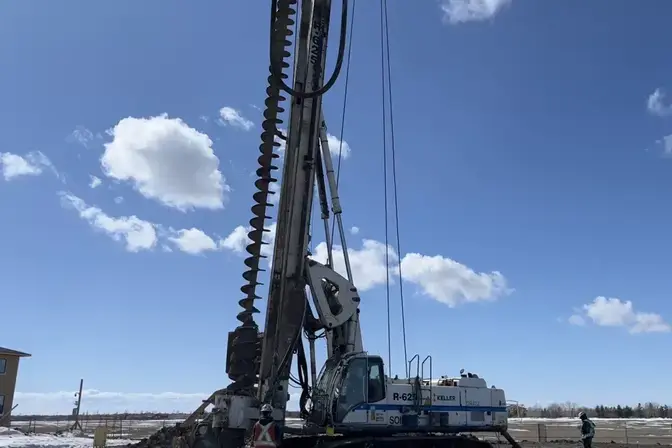
City of Regina Fire Station #8
Keller delivered a cost‑effective design‑build CFA (auger cast) piling solution for the City of Regina’s Fire Station #8.
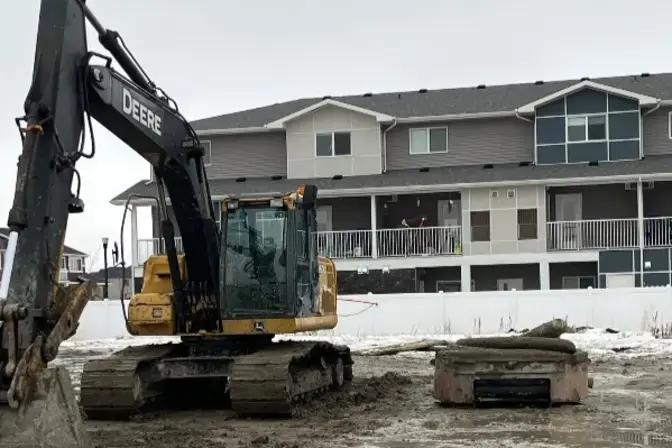
Residential
Neville Drive South Apartment
Keller delivered a design-build foundation solution to support a six-story residential development.
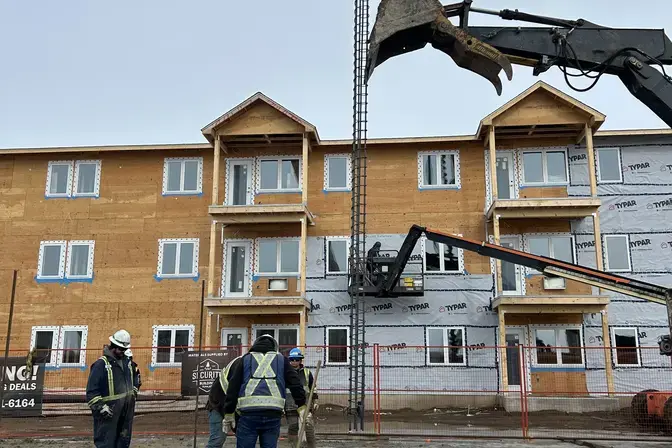
Institutional
University of Saskatchewan
Keller installed belled drilled shafts to support a new university development, overcoming variable soil conditions and winter construction.
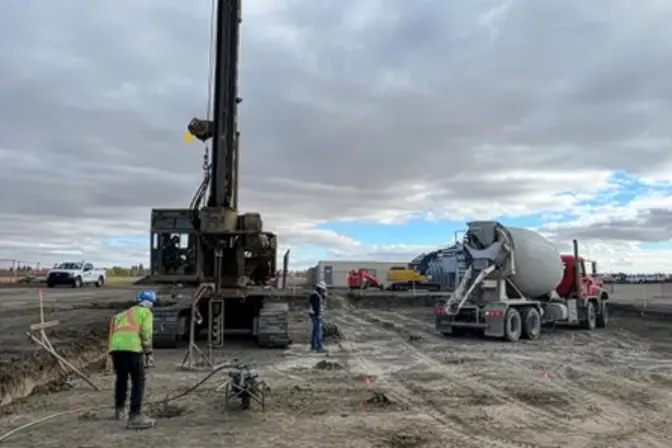
Power
EPCOR’s Cloverbar T-Line
Keller installed drilled shafts, providing a foundation solution for transmission monopoles and overcoming complex utility constraints, challenging site access, and winter conditions.