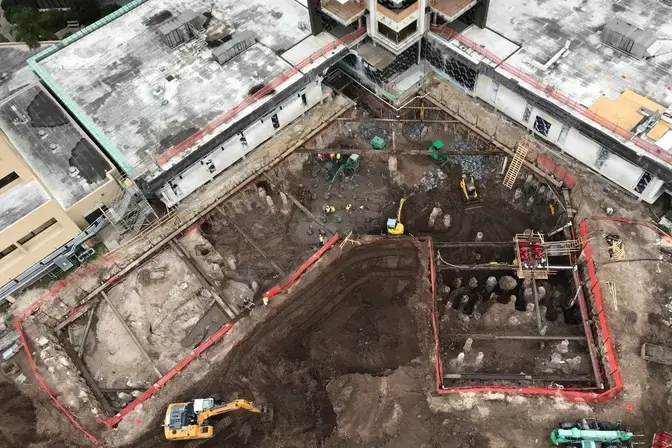
Secant or tangent piles are columns constructed adjacent (tangent) or overlapping (secant) to form structural or cutoff walls. From soil mixing to drilled shafts, we draw on our complete suite of techniques to optimize the design and construction of these walls.
Process
The columns are constructed using soil mixing, jet grouting, auger cast, or drilled shaft methods. Sequenced construction of the elements helps ensure a tight seal for water cut-off. The design can incorporate steel bars or beams for reinforcement. Anchors provide additional lateral support if needed. Secant or tangent pile walls can be constructed in various soil conditions, including through cobbles and boulders.
Secant pile walls retained by anchors or strutting systems are often supported by a waler beam to distribute the loads (prevent punching of anchor/strut through the pile) and as a mitigation measure for the unlikely event of an anchor/strut not carrying the load. This waler beam can be constructed as a reinforced concrete beam cast towards the pile wall or using steel profiles to be fixed to the piles and anchors/strutting systems.
Common uses
- Provide slope stabilization
- Enable and support excavations
- Support bulkheads
- Create barriers to groundwater flow
Advantages
- Can be constructed in a wide variety of soil conditions, including through cobbles and boulders
- Very little deformation and settlement on the outside
- Can carry high loads from surrounding structures
- Less vibration during construction
Quality assurance
We use the latest technology, testing regimes, and best practices protocols developed over many years to ensure our pile walls' position, verticality, and structural integrity.
Related Solutions
Related projects
Institutional
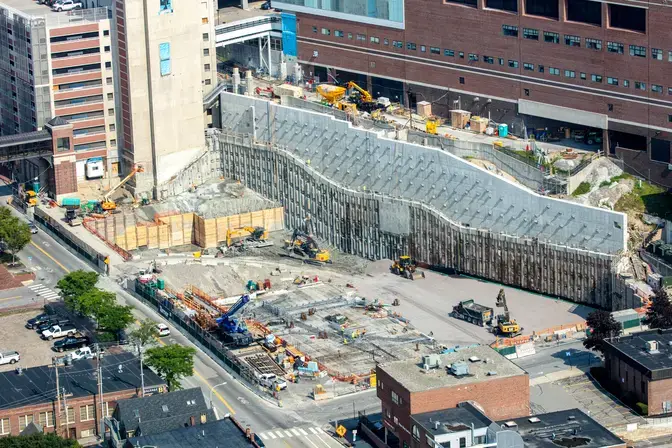
Maine Medical Center
Maine Medical Center is northern New England’s largest hospital and a leading heart care, orthopedics, and pediatric care facility. To update the 150-year-old facilities, Maine Medical is undergoing the largest modernization project in its history, constructing new buildings for patient rooms and state-of-the-art surgical suites.
Commercial
Cargill Canada
Keller provided a value-engineered auger cast design for a canola processing facility in Saskatchewan.
Commercial
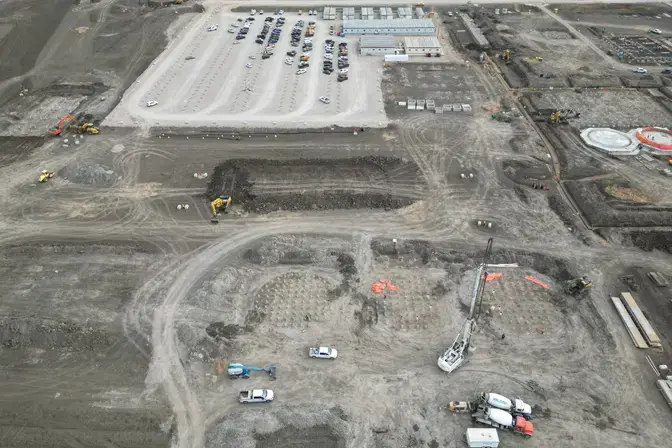
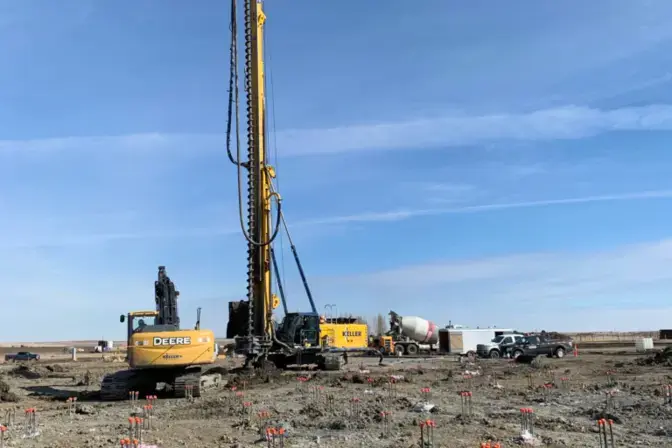
G3 Inland Grain Terminal – Swift Current
G3 Canada Ltd. is responsible for the storage and transfer of approximately 3 million tonnes of grain from British Columbia to Quebec. The new G3 Swift Current Grain Terminal will increase grain loading and transportation efficiency in Western Canada, with a total capacity of 42,000 tons.
Residential
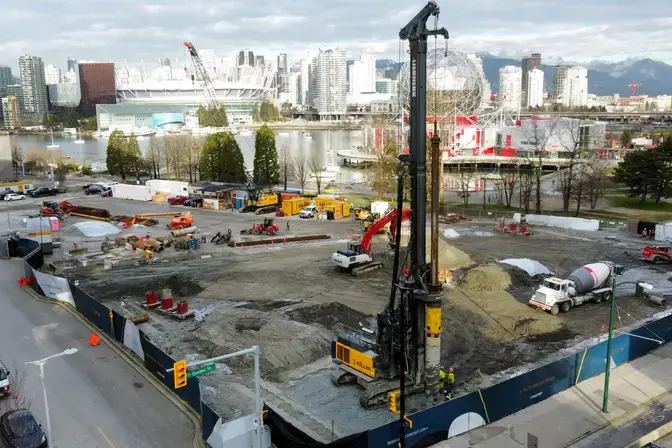
The Creek - Building 5
The Creek is a luxury condominium tower and public park development located within the historic Southeast False Creek flats adjacent to the False Creek inlet on the outskirts of downtown Vancouver. Five buildings make up the complex, with Building 5, also known as Tesoro, being the largest.
Institutional
St Joseph’s Hospital Inpatient Tower
Keller’s soil mixing technology has proved to be effective for underground construction in Florida where complex subsurface soils typically coupled with high groundwater have historically proven challenging for owners and contractors alike.