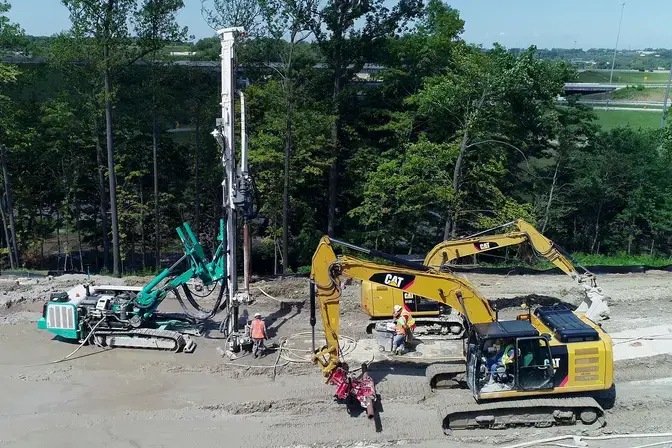
The micropile slide stabilization system (MS3) consists of an array of micropiles, working in tension and compression, that connect as a system using a structurally reinforced grade beam to stop slide movements.
Process
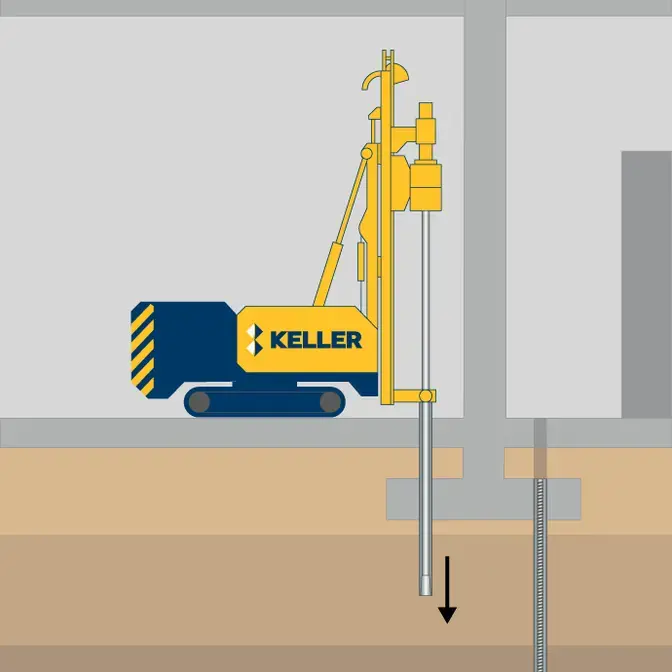
The micropile slide stabilization system (MS³) retains soil by connecting an array of drilled and grouted micropiles, sometimes combined with ground anchors, to a reinforced concrete beam constructed near the ground surface.
A small bench is cut into the slope to allow access to the micropile drill rig. A reinforced concrete beam is first constructed on the ground surface, through which micropiles are then drilled at angles. The micropiles are then grouted and connected to the beam. The finished micropiles act in tension and compression to effectively create an integral, stabilized ground reinforcement system to resist sliding forces in the slope. The grade beam can be buried, hiding the slope stabilization system from view.
Select a technique:
Common uses
- Slope and landslide stabilization
- Side hill fill stabilization
Advantages
- Micropiles are constructible in any soil type
- Minimal excavation and environmental impact
- Visibility of finished MS³ wall is little to none
- Constructed without vibration
Quality assurance
We have developed and trademarked this technique using our vast knowledge of micropile installation.

Related projects
Oil, gas and chemical
Osito Canyon Landslide Stabilization
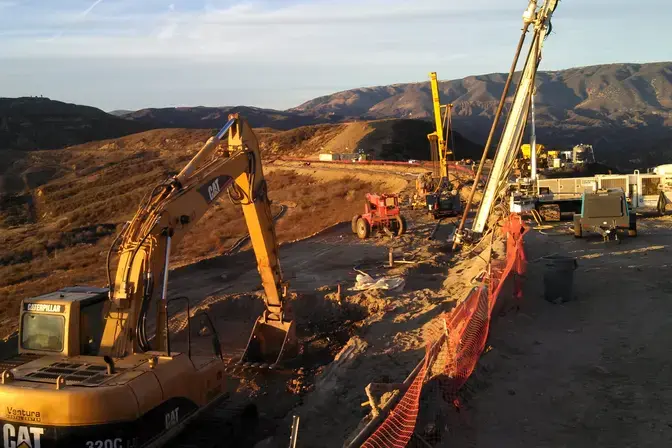
Slide events are common in Osito Canyon in the Angeles National Forest. During heavy rains in 2005, an approximately 900 ft long landslide occurred along the historic Old Ridge Route overlooking the canyon.
Commercial
Recreational Entertainment Facility
After the failure of an MSE wall delayed the opening of a new recreational facility, the client called upon Keller to install a Micropile Slope Stabilization system (MS3).