
Keller installed belled drilled shafts to support a new university development, overcoming variable soil conditions and winter construction.
The project
Construction at the University of Saskatchewan involved a new 24,000 SF campus development, including genomics and soil science buildings. Subsurface conditions consisted of clay and glacial till overlying dense sand with localized seepage, requiring a deep foundation solution.
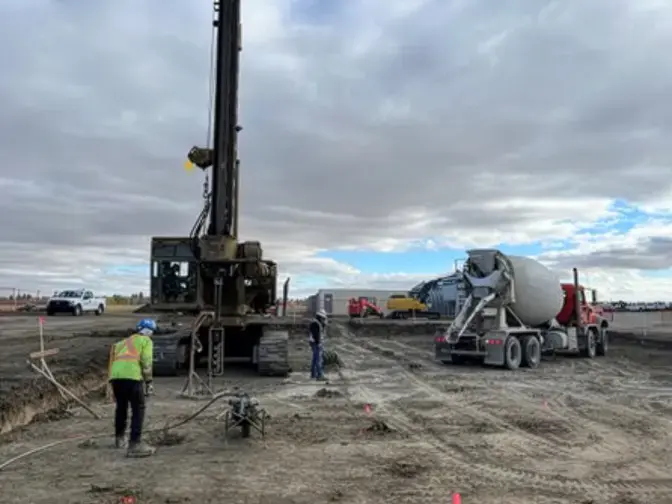
Keller installed drilled shafts to support both structures. Shafts ranged from approximately 16.4 to 19.7 ft (5 to 6 m) in length with shaft diameters up to 1.7 ft (508 mm) and belled bases up to 4.6 ft (1,400 mm) in diameter. The stiff clay profile generally allowed for open-hole construction, while casing was used in select locations where sand layers introduced instability.
Construction was executed under constrained schedule conditions, with a delayed start and work extending into the winter months. Dense soils and cold temperatures impacted drilling productivity and equipment performance; however, Keller maintained progress through field adjustments and winterization measures. Quality assurance was supported through pile inspection and concrete testing, ensuring compliance with project requirements.