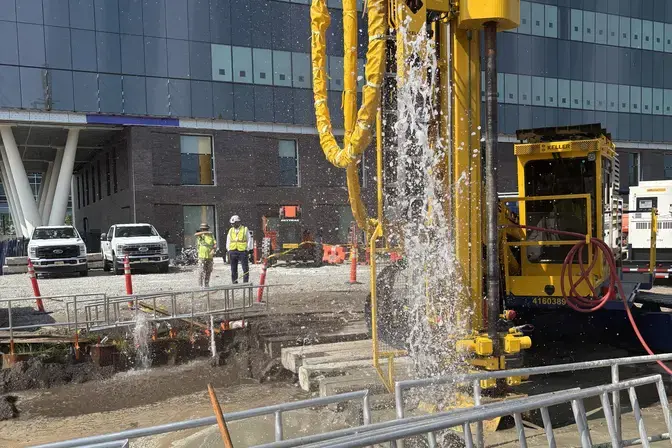
During construction, it is often necessary to form a stable excavation to prevent any associated movement from damaging neighboring structures or utilities. Keller offers flexible solutions to address even highly complex temporary or permanent excavation support problems.
What is support of excavation?
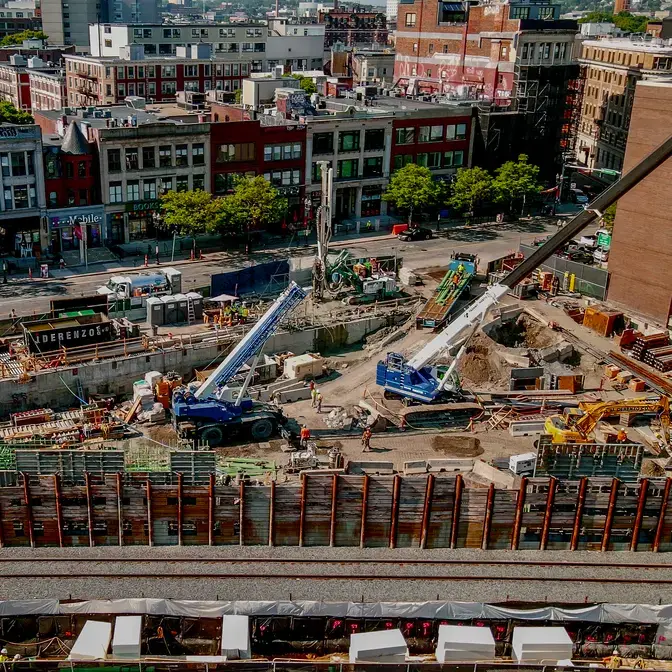
Support of excavation (SOE) involves temporary or permanent systems used to stabilize excavations during construction. These systems are designed to control ground movement, manage earth and groundwater pressures, and protect nearby structures and utilities. Support of excavation systems are commonly used for deep excavations, urban construction, and projects constructed near existing facilities.
When is support of excavation used?
Support of excavation systems may be required when:
- Excavations extend below stable slope limits
- Nearby structures or utilities must be protected
- Space constraints prevent sloped excavation
- Ground or groundwater conditions create instability
- Excavations are adjacent to roadways or property boundaries
Support of excavation systems are typically temporary and designed to enable safe construction within restricted sites. Where long‑term slope stability is required beyond the construction phase, slope stabilization solutions may be more appropriate. These approaches are sometimes combined where excavation geometry and permanent stability requirements overlap.
Support of excavation methods and approaches
The design and construction of support of excavation (SOE) systems can be complex due to soil structure, depth of cut, groundwater presence, weather conditions, superimposed loads, seismic loads, vibrations, and adjacent construction. The design must address the stability of the excavation bottom when below the water table.
Buildings, construction equipment, and stockpiled materials adjacent to an excavation result in lateral loads on the retention system. The underpinning of adjacent structures can reduce the loading on an excavation wall and the risk of building settlement. Excavation shoring can be affected by vibrations from traffic, railways, blasting, and machines operated in adjacent buildings.
Solutions may include stiff earth retention systems, braced excavations, or anchored walls. Excavation support can be temporary or permanent and is often coordinated with groundwater control, ground improvement, and foundation systems to manage risk and optimize constructability.
Why choose Keller for support of excavation systems?
Keller delivers support for excavation systems in constrained and high-risk construction environments, supported by geotechnical expertise and design-build execution. Our understanding of excavation hazards and our ability to coordinate excavation support with groundwater control, deep foundations, and ground improvement help achieve safe, efficient outcomes.
Common uses
- Support excavations and excavation bracing
- Limit ground movement near adjacent structures
- Support excavation for basements, shafts, and below‑grade construction
- Support and remediate bulkheads and wharfs
- Laterally support placed fills
Related projects
Sports and entertainment
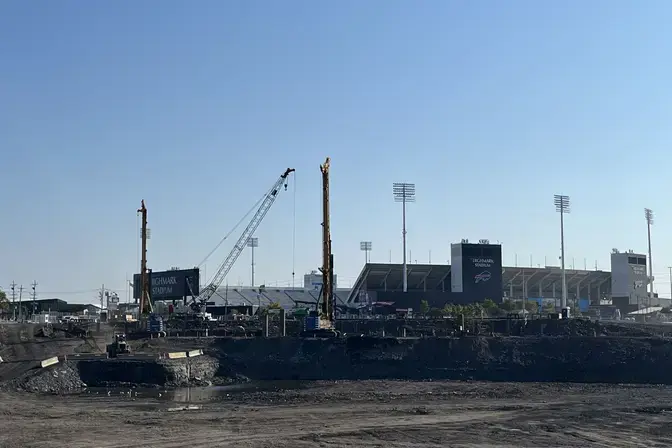
Highmark Stadium
Keller’s wide equipment fleet and extensive experience with multiple techniques provide a design-build excavation support solution for the future home of the Buffalo Bills.
Power
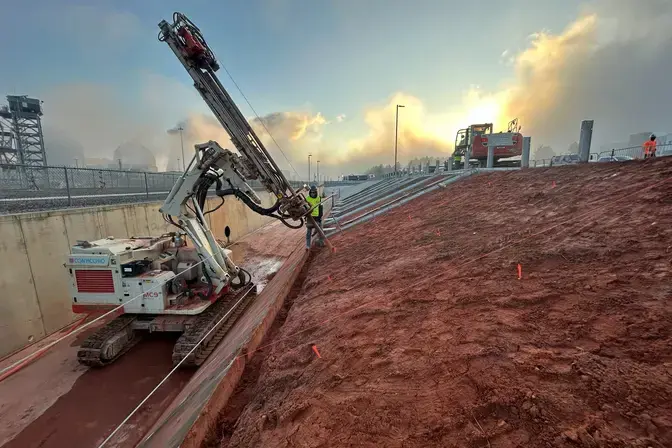
Detention Pond Stabilization
Keller installed a permanently anchored sheet pile wall to support the outfall of the stormwater management flume into the existing site detention pond.
Institutional
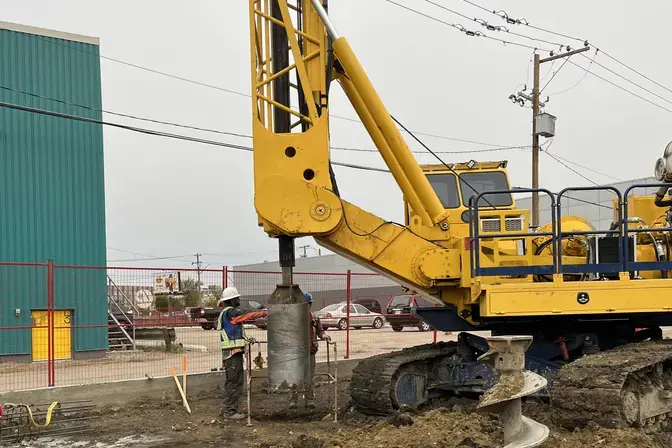
Saskatoon Central Library
Keller provides design-build excavation support and deep foundations for new library facility in downtown Saskatoon.
Infrastructure
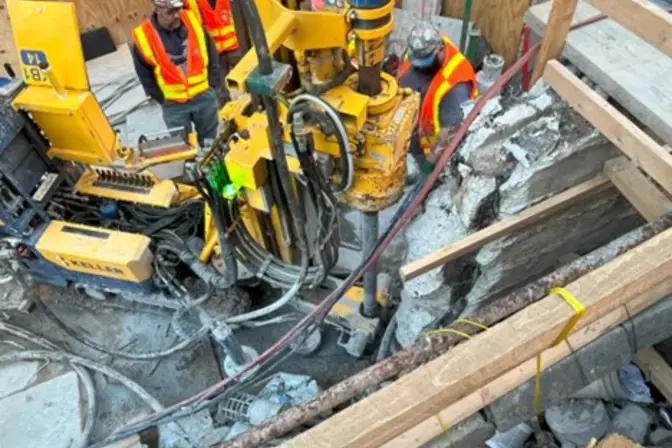
ADA upgrades at 14th Street
Keller provides groundwater control and excavation support solutions to facilitate ADA upgrades to NYC subway stations.
Institutional
South Shore University Hospital
Keller installed two jet grout bottom seals to keep a dry excavation for underground fuel storage tanks and a pump station at Northwell Health’s Bay Shore campus expansion